
What to Do When an Island Trail Disappears: Route-Finding Without Damaging Vegetation
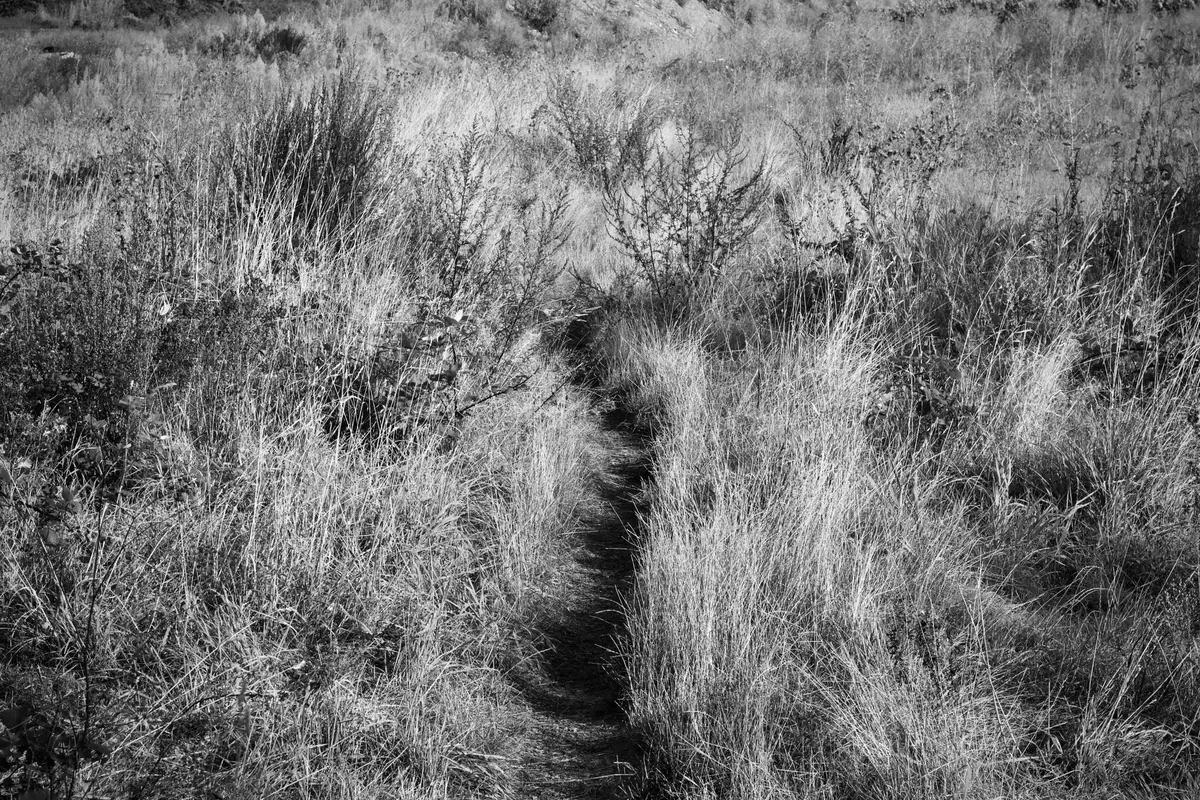
Two hours into a ridge walk, the path you were following turns into a suggestion: a few flattened grasses, a scuff of pale soil, then nothing but wind-shaped scrub. On an island this happens more often than guidebooks admit. Winter storms erase switchbacks, spring growth swallows them whole, goats and sheep take shortcuts of their own. The trick is not to be brave about it. It is to be methodical, and to keep your boots off plants that need a decade to grow back.
What follows is the routine worth running the moment the trail stops being obvious: stop, look back, read the ground, and set a limit on how far you will search before you turn around. It is not dramatic. It is the reason experienced island walkers come home with the same route they planned and a hillside that looks untouched.
Why Island Trails Vanish So Easily
Island paths are often old. Many were mule tracks, shepherd routes or footpaths between terraces, kept open by daily use for generations. When that use stops, the vegetation does not wait politely. On thin island soils, scrub closes in fast, and a season of strong wind can bury a whole stretch of trail under leaf litter and fallen branches.
Coastal routes have their own habits. Dunes shift, cliffs crumble, and a storm surge can remove a section of path overnight. Fires open land that then grows back with dense, thorny regrowth that hides the line completely. None of this means the route is closed or dangerous. It usually means the corridor is still there, and you have to find it rather than follow it.
Stop First, Search Second
The commonest mistake is to keep walking while you scan. That is how a single faint path becomes three faint paths, then a trampled patch, then an eroded scar that takes years to heal. The moment you are unsure, stand still. Give it thirty seconds without moving your feet. Most faded paths are lost by hurrying, not by difficulty.
Then turn around. The view you need is not ahead, it is behind: the shape of the slope you just descended, the boulder you passed, the fork where the ground felt firm. Look at it properly, because that is the picture you will be trying to match on the way back. Photograph it if you have a phone or camera handy. A ten-second photo of a junction is worth more than an hour of memory.
Terrain Clues: What a Faded Path Leaves Behind
Underfoot
Compacted ground is darker, smoother and slightly hollowed compared with the surrounding soil. Look for a strip of flattened grass that runs in a line, cut stems at a consistent height, or stones that have been kicked to the edges of a corridor. Old routes often keep their stonework long after the tread has gone: a run of flat rocks set into a slope, a low retaining wall, a short flight of worn steps, a terrace edge.
At knee and head height
Paths leave marks above the ground too. Branches that have been brushed aside repeatedly grow in a slightly different direction. A gap in the canopy that runs in a straight line is a strong hint, as is a tunnel of vegetation with a clear floor beneath it. Cairns and paint marks help when they exist, but treat them as suggestions rather than instructions: they are sometimes old, sometimes misleading, and sometimes built by people who were just as lost as you are.
The shape of the land
Before you hunt for footprints, ask where a path would sensibly go. Old routes follow the easiest gradient: saddles between hills, the contour line around a slope, the dry bed of a stream, the shoulder of a ridge. If a faint line of cleared ground appears exactly where a route ought to be, that is probably it. And learn to tell animal trails from human ones. Goat paths tend to dive under low branches and take steep, direct lines; walked paths tend to swing around obstacles and prefer gentler angles.
Backtracking Rules That Keep Small Problems Small
Turning around is a skill, and it is much easier when you decide the rules before you need them.
- Turn around at the point of certainty. Go back to the last place where you knew exactly where you were, then search forward from there. Not from where you got confused.
- Set a limit and keep it. A common approach is to allow a fixed search window, or a set distance, and then commit to retracing your steps regardless of how close the path feels.
- Move one person at a time. If you are in a group, leave everyone else standing still while one person scouts a short way ahead and reports back. Five people fanning out across a slope does far more damage than one pair of boots.
- Never split up to "try both ways". It doubles the search area and halves the information.
- Mark your decision points. A visible landmark, a note of the bearing, a photo, or a stone placed where the trail leaves a clearing. You will need these markers more than you expect.
- Retrace exactly, not approximately. Following the general direction back is how people end up on a parallel slope with no idea how they got there.
Walking Lightly: Finding a Line Without Crushing the Plants
Island vegetation is often tougher than it looks and far more fragile than it feels. Wind, salt and drought make plants slow-growing and low to the ground; a cushion of thyme or a mat of sea fennel may be older than the person standing on it. Thin soils, lichen crusts and dune grasses can be damaged by a single careless step and take many seasons to recover.
So make foot placement a deliberate act rather than a consequence of where you are looking.
- Prefer rock, scree, bare soil and dry grass over living ground cover, especially anything cushion-shaped, crusty or growing in loose sand.
- Walk in single file along the same few footprints instead of spreading out to compare options.
- Cross vegetation perpendicular to its edge, in one narrow line, rather than walking along it and widening the damage.
- Keep trekking poles off soft ground. A pole tip punches through crusts and into root mats; plant it on rock or shorten it and carry it.
- Do not step around small obstacles. Puddles, roots and low shrubs create the informal "braid" paths that turn one trail into five. Walk through the shallow puddle, step over the root.
- Leave the plants alone. No picking, no cutting a stick to clear the way, no pulling at anything to see what it is.
When to Give Up the Route and Go Back
Every search has a cost, and on islands that cost is often water. Shade is scarce, refills are rarer, and the heat that felt pleasant at nine in the morning is a different proposition at two. If you are drinking more than planned, if the group is tiring, if the ground is getting steeper or looser, or if cloud is coming in, take the route you know rather than the route you hope for.
Before you set off, leave a note of your intended route with someone, carry a map and compass or a charged offline map, and know that in Italy the European emergency number is 112. A phone is useful, but on many coastlines and ridges there is no signal: treat it as a convenience, not a safety net.
A Small Routine Before the Trail Gets Interesting
Most of this comes down to habits formed in the first twenty minutes of a walk.
- Note the junctions you pass and glance back at each one — the return view is the one that matters.
- Agree as a group where you will turn around if the path fades, and stick to it.
- Keep your eyes ahead along the line of the trail, not just at your feet; faded paths are usually visible as a corridor rather than a surface.
- Choose your footsteps as if the ground were someone's garden, because on an island it effectively is.
A path that disappears is rarely an emergency. It is a question, and usually a small one: which way did the ground want people to walk? Answer it slowly, look backwards more than forwards, and be willing to end the day with the route unfinished. The hillside will be there next spring, and so, if you walk it this way, will the trail.
Photo: Peter Dyllong / Pexels